Rabbit's Feet, Fortune Apps, and the $5 Billion Business of Selling Luck to Americans
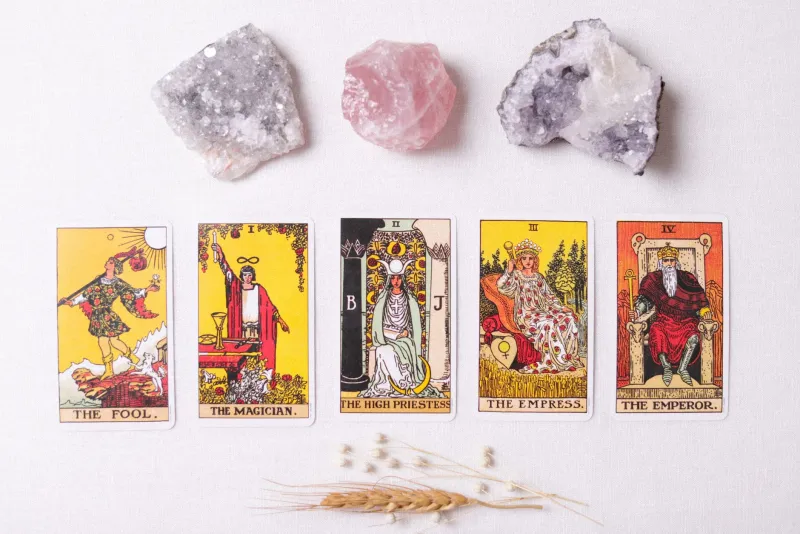
Somewhere in America right now, a guy is paying $40 for a bracelet that promises to align his energy with wealth. Down the street, someone just dropped $9.99 on an app that reads their daily fortune. In a strip mall in Anaheim, a feng shui consultant is charging $250 an hour to tell a small business owner why their cash register faces the wrong direction.
None of this is fringe. All of it adds up to a multi-billion-dollar industry built on one product: luck.
The Luck Market Is Bigger Than You Think
Try to tally it up. Lucky charms and talismans. Astrology apps (Co-Star and its rivals have been downloaded tens of millions of times). Tarot readings on Etsy. Feng shui consultations. 'Lucky number' jewelry, candles, phone cases. Psychic hotlines that never went away — they just moved to TikTok Live.
Market researchers have pegged the broader 'mystical services' economy in the US at well over $2 billion a year, and that's before you count the merch, the crystals, the manifestation journals, and the lucky-themed apparel flooding Amazon search results. Add in adjacent spending — the numerology reports, the 'abundance' coaching, the lucky cat figurines — and you get a faith economy that rivals the GDP of a small country.
And here's the kicker: a huge chunk of this market overlaps almost perfectly with the people playing daily number games. The $20 rabbit's foot and the $20 worth of picks? Frequently the same wallet.
Why Buy Luck When You Can Buy a Ticket?
On paper, it makes no sense. A charm has never moved a ball or flipped a digit. A lottery ticket at least carries a defined, if tiny, chance. So why do Americans spend on both?
The short answer from psychology: perceived control. Researchers have long noted that people facing random outcomes will grab onto anything that makes the randomness feel manageable. A lucky number, a ritual, a bracelet — these don't change the odds, but they change how the odds feel. And feeling prepared, even falsely, is its own reward.
There's also the confidence effect. In classic studies, people carrying a 'lucky charm' actually performed better on tasks involving skill — golf putting, memory games, anagram solving. Not because the charm did anything, but because belief in the charm boosted self-assurance. That's the loophole the luck economy sells through: the charm isn't for the game, it's for you.
Meet the Merchants of Fortune
The businesses selling luck have gotten remarkably sophisticated.
- The charm economy. What used to be a gas station keychain is now a curated market. Small brands on Etsy and TikTok Shop sell 'wealth-drawing' bracelets, lucky number pendants, and red string bracelets — a nod to traditions where red wards off misfortune and invites fortune in.
- Fortune tech. Apps now offer daily lucky numbers generated from your birthdate, name numerology, or an algorithm nobody's explained. Some push notifications at 7 a.m.: Your lucky digits for today are 8, 19, 88. It's astrology with an API.
- Consultants and readers. Feng shui and numerology readings have gone fully digital. Book a video call, get a personalized 'lucky number profile,' pay by the session. Some practitioners openly market to players, promising numbers 'aligned with your energy.'
Notice the pattern? The product isn't the object or the reading. It's the story that you, specifically, have an edge.
Does a Talisman Change How You Play?
This is where it gets interesting. Psychologists say buying luck can genuinely alter behavior — just not the way buyers hope.
Players with a talisman tend to play more confidently. Sometimes that means playing more often, betting slightly bigger, or sticking with a 'lucky' number longer than they otherwise would. Confidence feels great. But in a game of pure chance, confidence doesn't bend the odds — it just changes your spending pattern.
There's a real upside, though, and it's worth saying plainly: if a $12 bracelet makes the experience more fun, and you treat it like entertainment rather than equipment, that's a perfectly fine purchase. Millions of people wear a lucky jersey to a game knowing full well it doesn't affect the score. Nobody's harmed by that.
The line gets blurry when the charm becomes a strategy — when 'my reader said 88 is my number this month' turns into chasing losses or overspending because the talisman 'owes' you a win. That's not luck. That's a budget leak with a charm on it.
The 88 Factor
It's no accident that lucky-number culture and gaming culture feed each other. The number 8 has long been the heavyweight champion of lucky digits in Chinese tradition — the word for it sounds like 'prosperity' — and 88 doubles down on that meaning. American players have picked up on it, which is why you'll spot 88-themed merch, usernames, and number picks showing up in gaming communities that have zero cultural connection to the tradition. A lucky number went viral, essentially.
That cross-pollination is the luck economy in miniature: an old belief, repackaged, sold to a new audience that half-believes and half-winks at the joke.
Buying Luck, Wisely
If you're going to spend on luck — and plenty of people happily will — a few ground rules keep it fun:
- Price it like a snack, not an investment. A charm's value is emotional. If you're expecting a return, you've bought the wrong thing.
- Never let a 'lucky number' set your stake. Your budget should be decided when you're calm, not when a fortune app tells you today's your day.
- Enjoy the ritual, skip the dependency. The best charms are the ones you'd still smile at if you never won a dime.
The $5 billion luck economy isn't going anywhere. Americans have always been a hopeful bunch — we just keep finding new packaging for the same old wish. Buy the bracelet if it makes you grin. Just remember: the charm rides shotgun. You're still the one holding the ticket.