The Lucky Hoodie, the Cleansing Spin, and Other Pre-Game Rituals American Players Won't Admit To
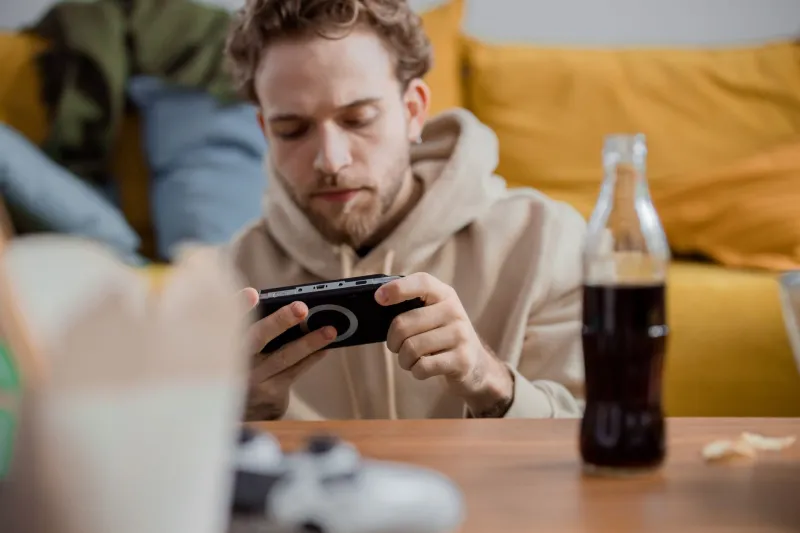
Ask a desk gambler in Ohio what they do before they hit 'Play,' and you might get a nervous laugh. Press a little harder, and the confession comes out: the lucky hoodie. The 9:47 PM start time. The 'cleansing' spin that doesn't count.
Nobody teaches these rituals. There's no tutorial video. And yet, if you spend any time in number-game communities on Reddit or Discord, you'll find the same superstitions popping up again and again, coast to coast. Here's a field guide to the weird little ceremonies of the American player — and what's actually going on in the brain when they 'work.'
The Lucky Hoodie Is Real, and It Has a Name
Ask around and you'll hear about garments with serious seniority. Marcus, a 34-year-old warehouse supervisor from Columbus, told us he's been wearing the same faded gray hoodie for every session since 2021. "It's not comfortable anymore. It's got a hole in the sleeve. But the one time I played in a t-shirt, I went 0-for-12. So. Yeah."
He's not alone. Players report lucky flannels, lucky socks, even a "lucky cap" that only comes out for evening sessions. The psychology term for this is enclothed cognition — the idea that what we wear subtly changes how we think and feel. Whether the hoodie does anything for the numbers is another question entirely. It does not. But try telling Marcus that.
The Cleansing Spin
Perhaps the most widespread ritual: the warm-up wager that "doesn't count."
Players describe placing a tiny, throwaway bet — 88 cents is a popular amount, for reasons that will surprise nobody who's read this site before — purely to "get the bad luck out of the account." Only after the cleansing spin do they make their "real" plays.
"It's like stretching before a run," says Dana, a nurse in Phoenix who plays quick-pick number games on her lunch break. "You wouldn't just walk in cold."
The run, of course, doesn't care if you stretched. But the ritual does something genuinely useful: it marks a mental boundary. That's a real psychological transition, even if the luck part is fiction.
The Bathroom Session
Yes, we have to talk about it. A surprising number of players admitted — some sheepishly, some proudly — that their biggest wins came during what they call "the bathroom session." The theory, as one Redditor put it: "Privacy, no distractions, and my phone's on the charger. It's the zone."
Is the zone real? The distraction-free part might be. Playing without splitting your attention means you're more present, more deliberate with your picks, and — crucially — more likely to stop when you planned to stop. The porcelain lucky charm is doing nothing. The quiet is doing something.
The 9:47 Phenomenon
Ask players about timing and you'll get answers with suspicious precision. Not 9:45. Not 10:00. 9:47.
"Ten o'clock is when everyone plays," one player explained, with total confidence. "You want to be just off the peak." Another swears by the top of the hour "when the system resets." Another only plays on the 8th, 18th, and 28th of the month.
None of these windows matter to a random number generator, which has no memory, no schedule, and no opinion about your calendar. But the timing rituals persist because they give players a feeling of insider knowledge — the sense that you've found a crack in the machine everyone else missed.
Why the Brain Buys It
Here's the sober part, and it's worth reading twice.
Rituals feel like they work because of what researchers call the illusion of control — our deep, stubborn need to believe our actions influence outcomes that are actually random. In a famous study, psychologist Ellen Langer found that people were more confident in a coin flip when they got to flip it themselves and bet on their "own" side. Nothing changed. Everything felt different.
Number games are the same machine with better lighting. Every ritual — the hoodie, the spin, the sacred minute — is your brain converting pure chance into something that feels like skill. And that feeling has a cost: it makes you play longer, bet bigger, and come back sooner.
There's a flip side, though. Rituals aren't all bad. A pre-game routine that includes a spending limit, a set session length, and a hard stop time does exactly what the lucky hoodie pretends to do: it gives you genuine control. You can't control the numbers. You can absolutely control the wallet.
The Ritual Worth Keeping
So build your own pre-game ceremony, if you want one. Light the candle. Wear the hoodie. Pick your sacred minute. Just make sure the most important step in the routine is the boring one: decide what you're willing to lose before the first spin, and walk away when you hit it.
That's not superstition. That's the only code that actually pays.
Play for fun, never for rent. If the game stops being fun, it's time to log off.